







Discover our top 5 holes that will make you stop on the tee to take in the view, from one of Europe’s most photographed par 3s to classic parkland golf under the pine trees
— October 26, 2026 | Text Joyce Best
Ask golfers to name their favourite course in the Algarve and you are unlikely to get a unanimous answer. With so many outstanding layouts packed into a relatively small stretch of southern Portugal, loyalties tend to run deep.
Ask them about individual holes, however, and a familiar handful of names soon begin to crop up.
Some are remembered for their beauty, others for the trouble they have caused over the years. The very best manage both – holes that make you stop on the tee to take in the view before turning your attention to the rather less relaxing matter of getting the ball safely to the other side.
From one of Europe’s most photographed par 3s to classic parkland golf beneath the pine trees, here is our Top 5 Algarve Holes.
The 16th at the Royal Course, Vale do Lobo
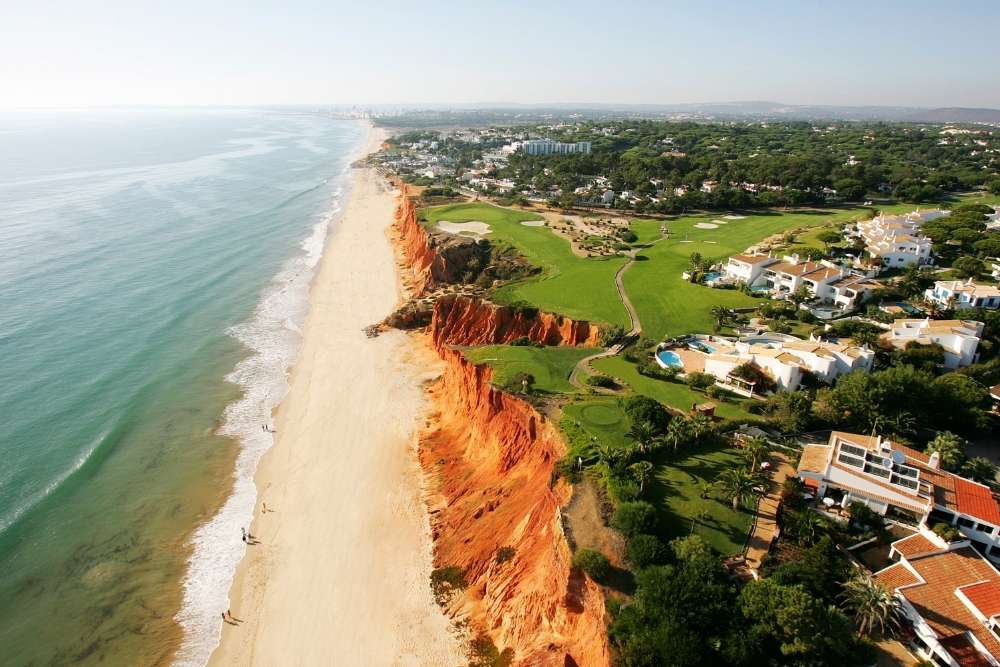
There are famous golf holes, and then there are holes that become symbols of an entire destination. The 16th on Vale do Lobo’s Royal Course belongs firmly in the latter category.
The par 3 is instantly recognisable: the green waits on the other side of the cliffs, with the Atlantic providing a spectacular – and potentially distracting – backdrop.
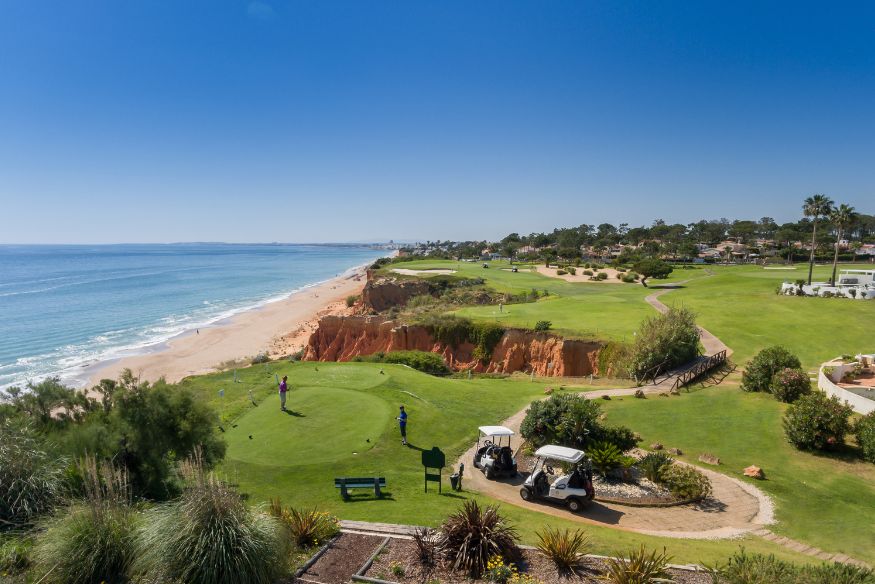
From the back tee, the hole measures 224m, with several teeing options from which to tackle the ravine. Vale do Lobo describes the cliff-top carry as one of the most photographed holes in Europe and a symbol of golf in the Algarve.
Golf Monthly includes the 16th among the world’s most famous golf holes, describing it as “both beautiful and scary”. Designed by Rocky Roquemore and based on original drawings by Sir Henry Cotton, the Royal Course opened in 1997.
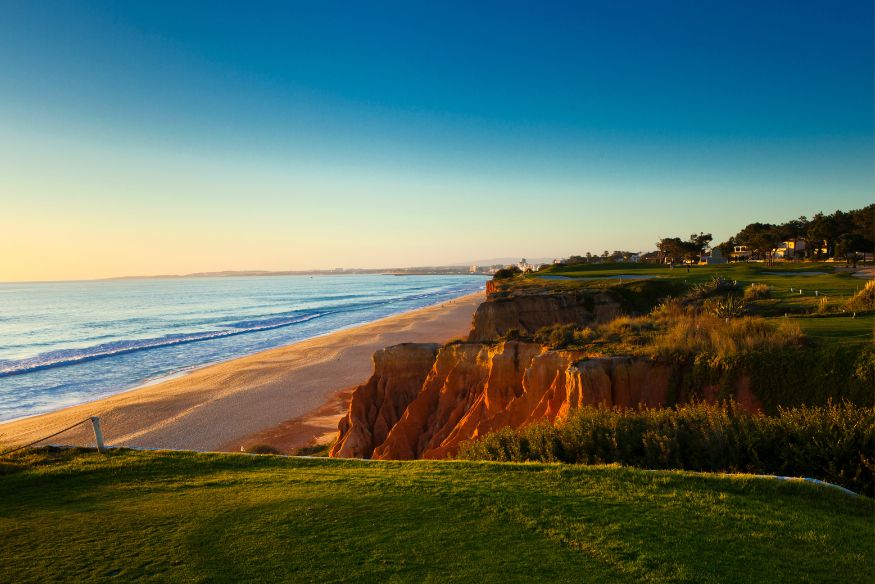
The challenge of its defining hole is wonderfully simple to understand, if considerably harder to execute: take in the coastline, choose your club, and decide just how much of the ravine you are willing to take on.
The 18th at San Lorenzo, Almancil
A great finishing hole should leave a lasting impression – and ideally give you something to discuss over a drink afterwards. The 18th at San Lorenzo comfortably manages both.
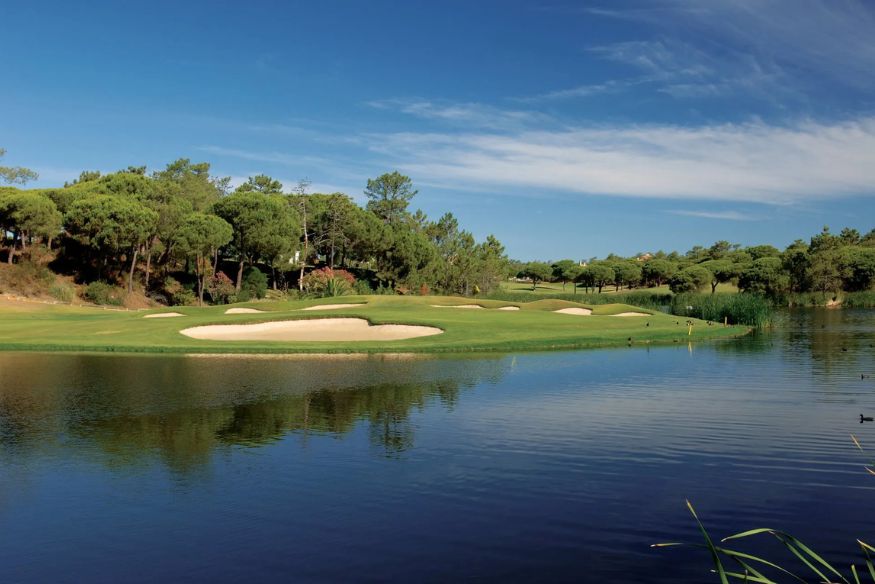
Set beside the Ria Formosa, San Lorenzo saves one of its toughest challenges for last. The par 4 asks plenty from a player who has already spent 17 holes trying to keep a score together. Water dominates the final approach, with the green sitting beyond the lagoon and little room for indecision.
Former Ladies European Tour player Georgina Simpson knows that feeling well. She won the 1993 Telegraph Junior Golf Championship at San Lorenzo and later recalled: “I remember feeling really nervous when playing my second shot over the lake to the green.” She found safety and made par, adding: “A par here is always good!”
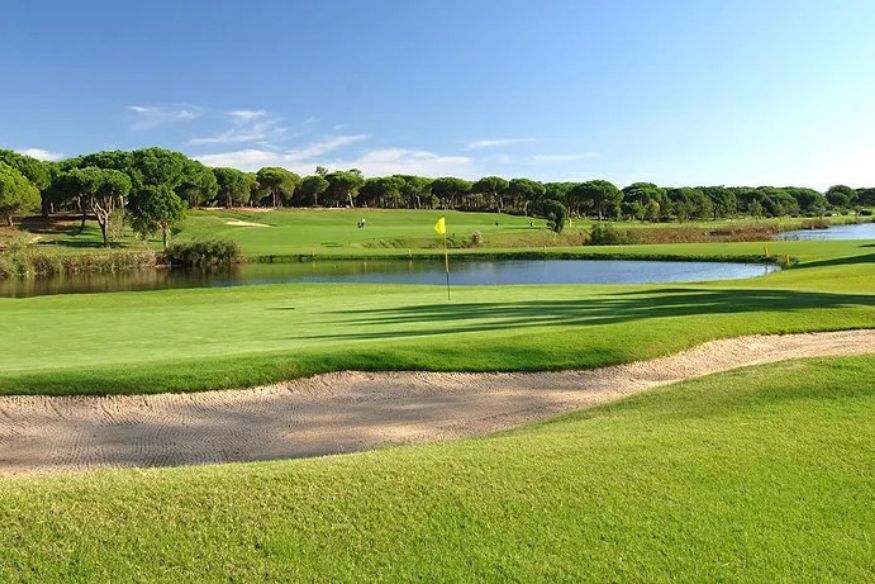
San Lorenzo will be closed for renovations until spring 2028 for renovations. Whether this famous finishing hole will emerge any different remains to be seen, but if it does, at least we’ll have the memories.
The 4th at the Old Course, Vilamoura
Not every memorable hole in the Algarve relies on a coastal setting. Sometimes pine trees, a pond, and more than half a century of golfing history are enough.
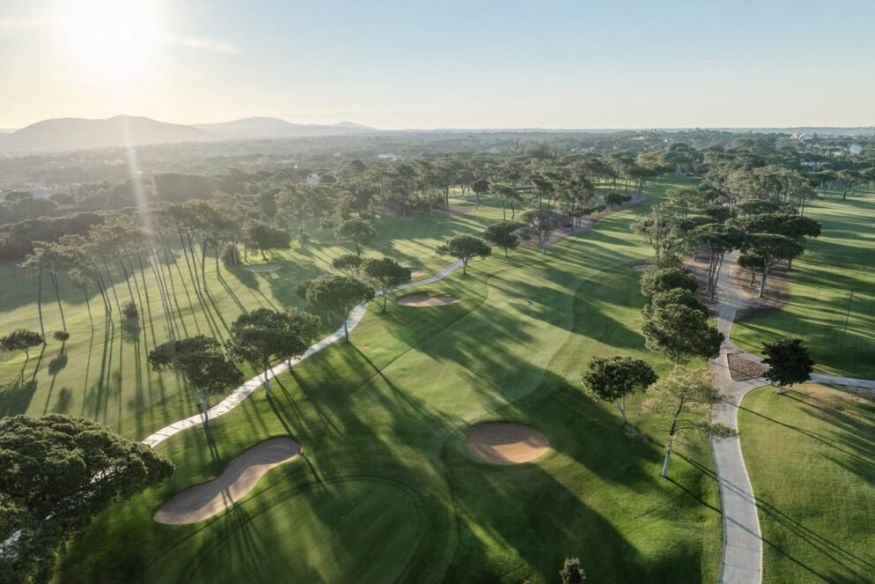
Designed by Frank Pennink and opened in 1969, the Old Course is one of the region’s classic layouts, with fairways threading their way through mature pine trees – an unmistakably different experience from the dramatic coastal golf found elsewhere in the Algarve.
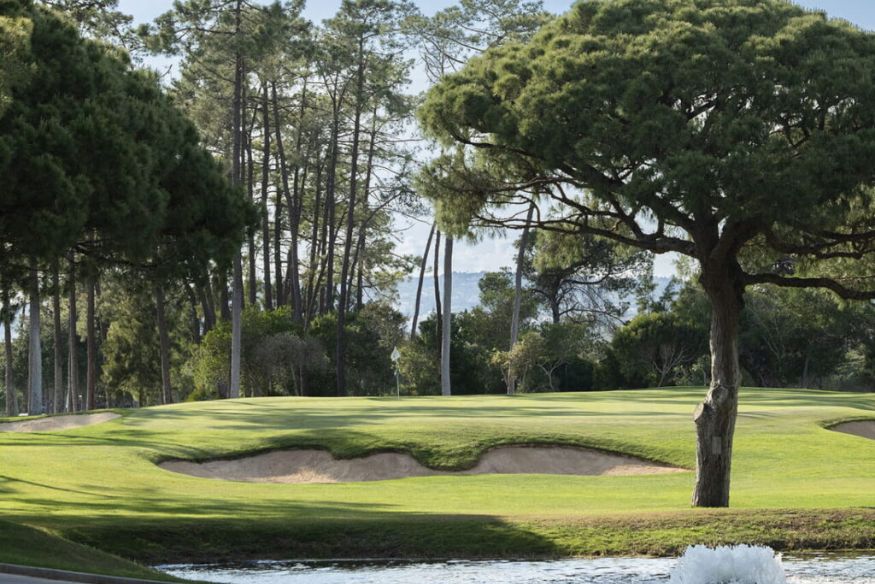
The 4th is its standout par 3. Vilamoura calls it the course’s “crown jewel”, requiring players to negotiate water on the way to a well-guarded green. The direct route also brings a tall pine tree and frontal bunker into play, with further bunkers around the putting surface.
There is nothing gimmicky about it. The beauty comes from the simplicity of the challenge: water in front, sand around the green, pine trees towering above, and a golf ball that suddenly seems very small indeed.
The 15th at the South Course, Quinta do Lago
By the time golfers arrive at the 15th on Quinta do Lago’s South Course, they should be prepared for the difficulty to move up a gear.
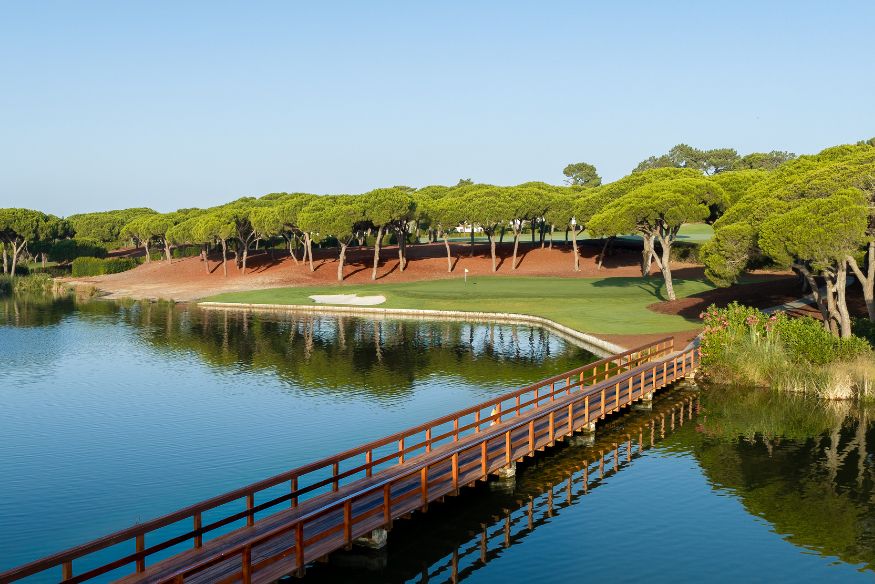
Designed by William Mitchell in 1974, the South Course has hosted the Portuguese Open eight times and remains one of Quinta do Lago’s most celebrated layouts. The course has considerable professional pedigree, including Colin Montgomerie’s emphatic Portuguese Open victory in 1989.
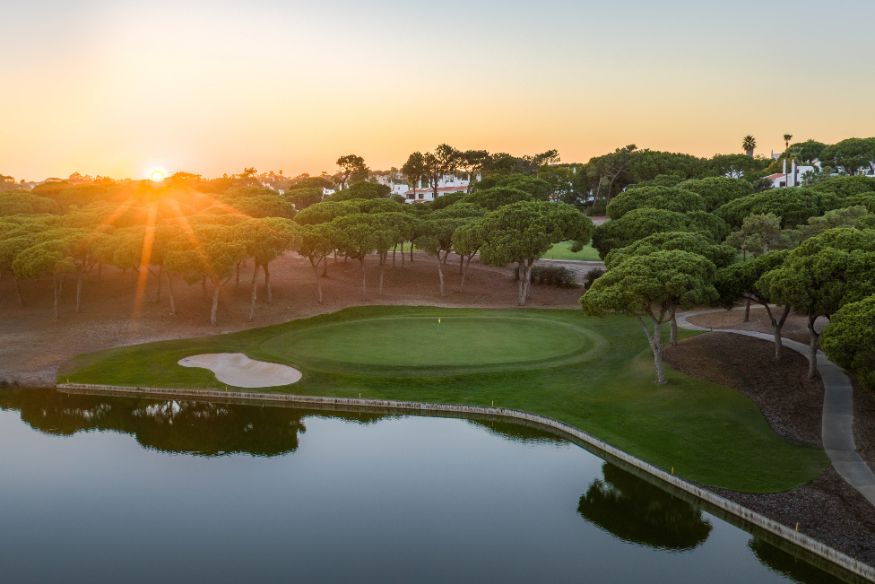
The reason the 15th stands out is immediately apparent: this par 3 demands a substantial carry across water, making commitment essential from the tee. Golf Digest, which ranks the South Course among the best in Continental Europe, describes it as a hole “that plays entirely over water”.
Water has a remarkable ability to make golfers question swings they trusted perfectly well a few minutes earlier. Yet that is also what makes finding the green so satisfying – that unmistakable feeling of having hit exactly the shot the hole demanded.
The 6th at Pine Cliffs Resort
With a name like “Devil’s Parlour”, nobody should arrive at the 6th at Pine Cliffs expecting an easy time.
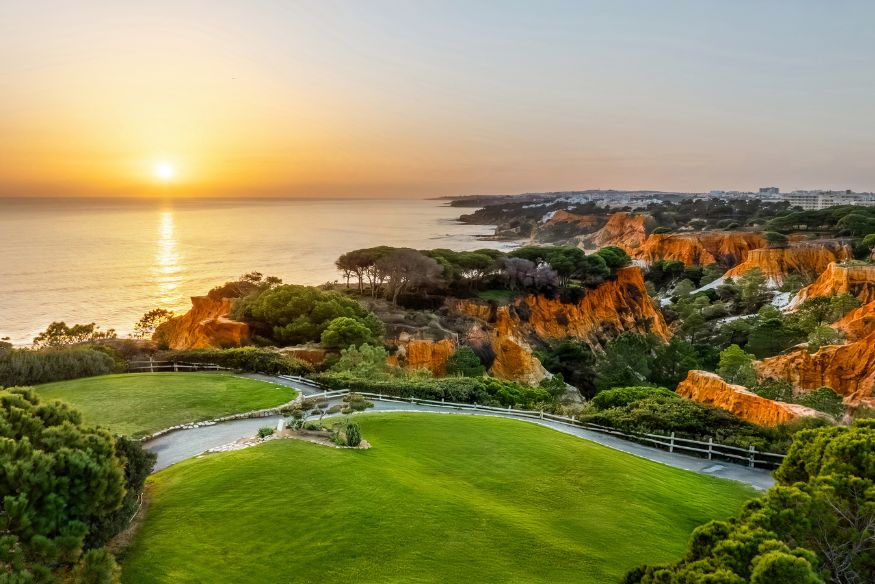
The nine-hole course, designed by Martin Hawtree, sits high above the Atlantic amid pine trees and dramatic coastal scenery. But it is this par 3 that steals the show. From the championship tee, golfers face a 197m carry across a ravine in the cliffs to a deep, narrow green on the other side.
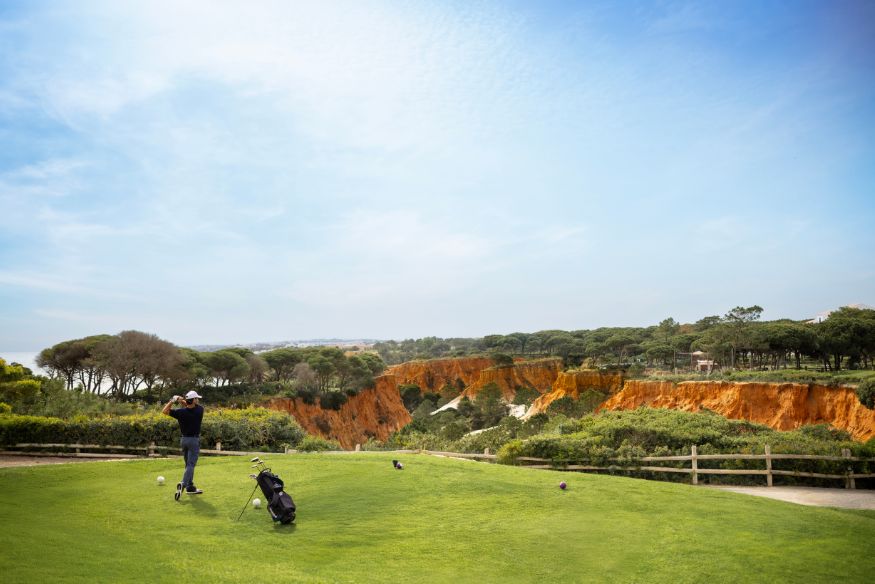
Golf Monthly singles out the Devil’s Parlour as the course’s famous hole and draws an irresistible comparison with another in our Top 5: had Pine Cliffs’ 6th “eaten its spinach when younger”, the magazine joked, it might have grown up to resemble Vale do Lobo’s 16th.
There is little mystery about what is required. The green is right there. Unfortunately, so is a considerable amount of empty space between you and it. The meeting of manicured green turf, rugged cliffs, and Atlantic Ocean makes the tee shot as photogenic as it is intimidating. And if the ball does not make it across? At least the view was worth stopping for.
Honourable mentions
Choosing just five inevitably means leaving out some worthy contenders. Monte Rei’s 13th is certainly one of them. The par 4 plays downhill from an elevated tee, with water and sand guarding the green.
Following the recent renovation of the North Course, we have yet to experience the renewed layout for ourselves, but we are sure this memorable hole has retained its charm.
Further west, the par-5 4th on Palmares’ Praia course descends towards the Atlantic, with magnificent views over Meia Praia accompanying a classic risk-and-reward decision for those tempted to reach the green in two.
At Penina, the 13th on the Sir Henry Cotton Championship Course comes with particularly impressive credentials.
Golf Today has described it as “one of the best par 3s in the world”, whilst the hole, with a lake running along the right and two bunkers guarding the sloping green, has also been named among the world’s top 500.
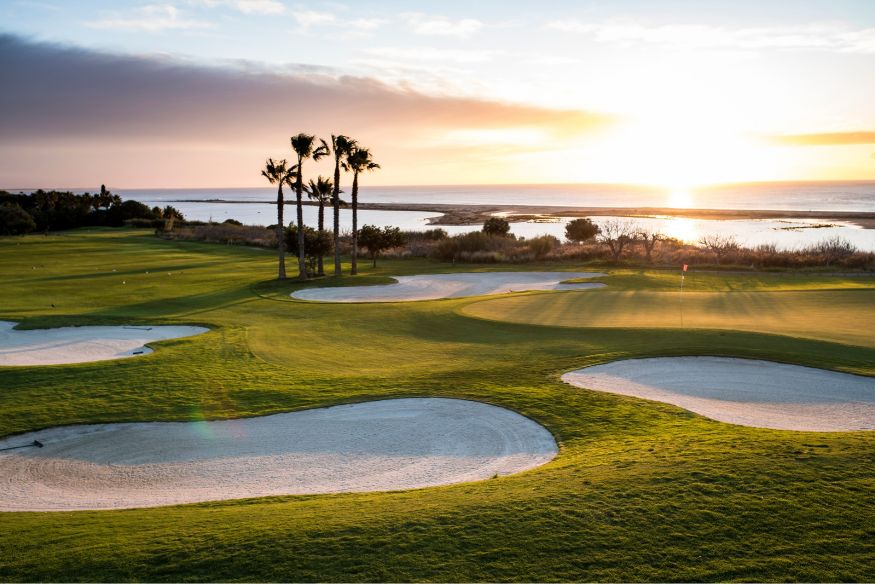
Moving east, Quinta da Ria’s signature 12th is a short, 290m par 4 with sweeping coastal views and strategically positioned palm trees ready to complicate the approach after an ambitious drive.
Finally, the par-5 18th on Amendoeira’s Faldo Course provides a fitting finale, narrowing between strategically placed bunkers before climbing towards a green set into the hillside.
Read also: A new European chapter begins in Vilamoura