










Playing the long game
— October 23, 2026 | Text Joyce Best

Golfers can spend an extraordinary amount of time worrying about equipment. Drivers are fitted, wedges replaced, putters changed when they misbehave, and endless discussions take place over shafts, lofts, balls, and grips.
Yet the most important piece of equipment we take onto the golf course is the one we perhaps think about least: ourselves.
Golf may not have the frantic pace of tennis or the obvious physical demands of running or cycling, but anyone who has walked off the 18th feeling considerably less energetic than they did on the first tee knows that it is far from sedentary.
A round involves walking, balance, rotation, coordination, and repeated muscular effort, usually over four hours or more.
Golfers walking a typical 18-hole course can cover around 6-8km, and The R&A’s latest Golf and Health Report highlights a growing body of evidence linking the game with physical, mental, and social benefits.
The international consensus on golf and health, published in the British Journal of Sports Medicine, similarly identifies moderate-intensity aerobic activity, strength, and balance among its benefits.
Perhaps the best thing about golf, however, is that we can continue playing for decades. Which makes looking after the golfer every bit as sensible as looking after the clubs.
Most golfers have witnessed the classic warm-up. Arrive slightly later than intended, put the shoes on in the car park, collect the clubs, take three increasingly enthusiastic practice swings beside the first tee, and announce, “That’ll do.” It probably won’t.
The golf swing asks quite a lot of the shoulders, hips, and back, particularly when the first full swing of the day is an ambitious attempt to send a driver 200m down the fairway.
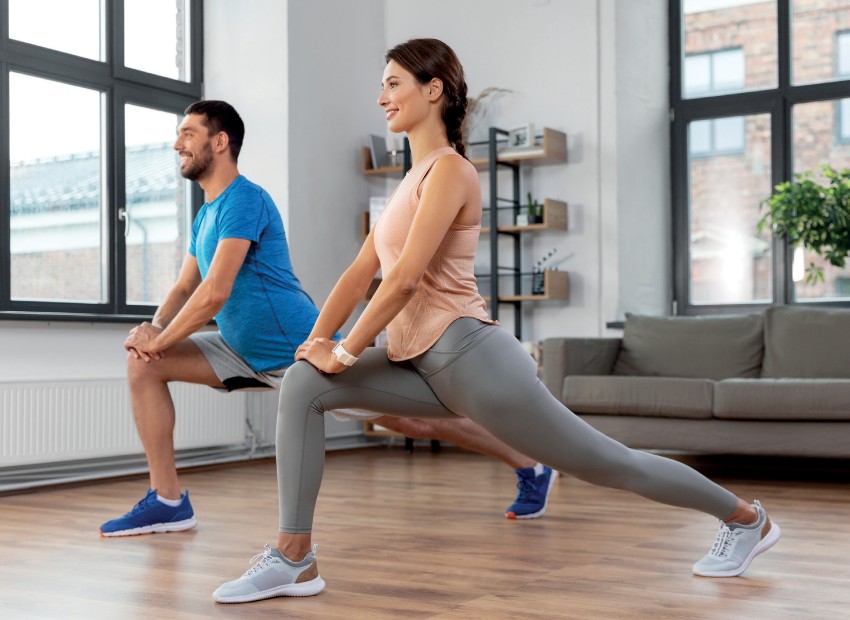
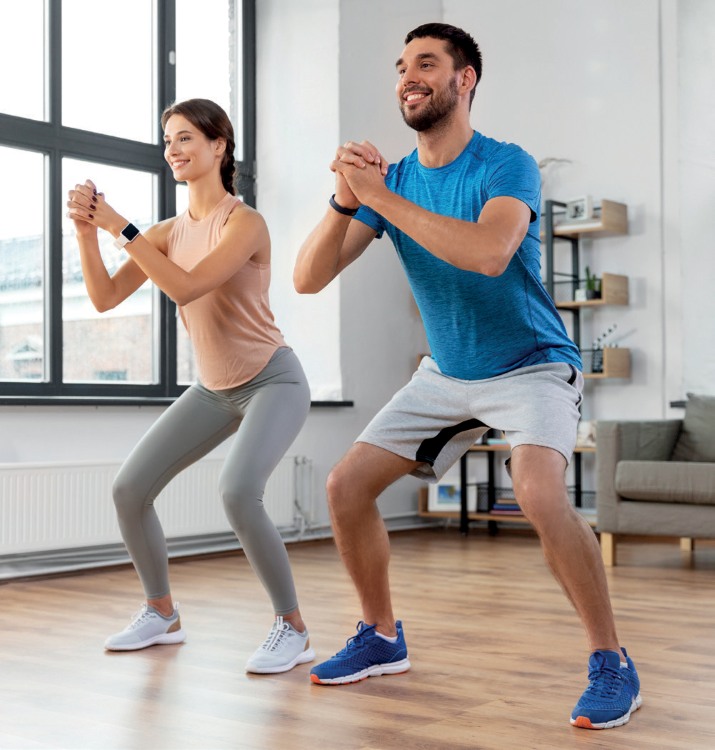
Mayo Clinic Sports Medicine recommends spending five to 10 minutes warming up, whilst research into golf warm-ups suggests dynamic routines can improve measures of performance. A few shoulder rotations, gentle body turns, squats, and gradually increasing practice swings help prepare the body for what comes next. The key word is “gradually”. Nobody needs to be doing lunges across the clubhouse at 8am.
Once on the course, one of golf’s great health advantages is also its simplest: walking. The international consensus encourages golfers who are able to do so to walk rather than use a buggy, although those using buggies can still benefit from physical activity, social interaction, and time outdoors.
And the buggy certainly has its place. On some Algarve courses, the distance between green and tee can feel as though the architect had a personal grudge against golfers, whilst hills, heat, or physical limitations can make one entirely sensible.
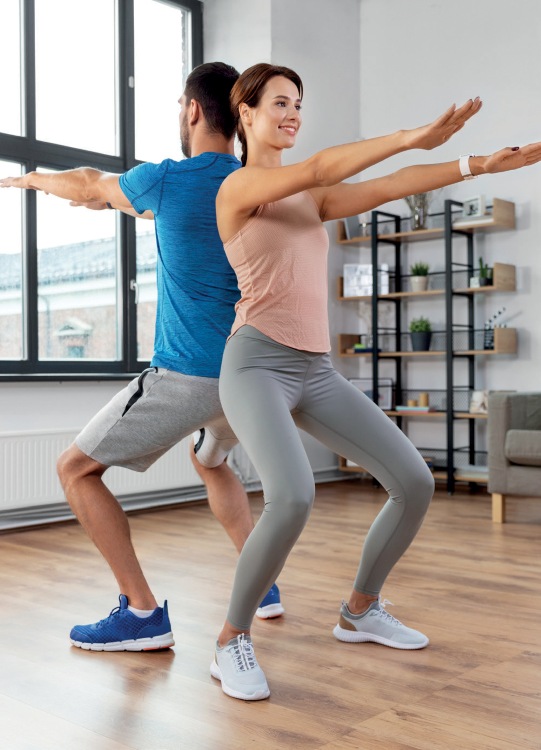
Strength matters too, whatever your handicap. Strong legs provide a stable base, a stronger core supports rotation, and strength around the hips and shoulders helps with everything from swinging the club to negotiating uneven ground.
The World Health Organization recommends muscle-strengthening activities on at least two days a week for adults, with additional emphasis on functional balance and strength as we get older.
You do not need to train like a Tour player. Squats from a chair, calf raises, gentle resistance exercises, and even just standing briefly on one leg can all contribute. The aim is not a six-pack. It is being able to stand confidently after four hours on the course.
Looking after the body also means recognising when something is not quite right. Golf’s repetitive nature places considerable demands on the joints and muscles. There is sometimes a temptation to play through everything.
A stiff back? It will loosen up. A sore elbow? Probably fine. A shoulder that has been complaining for six weeks? Perhaps another 18 holes will sort it out. Persistent pain is different.
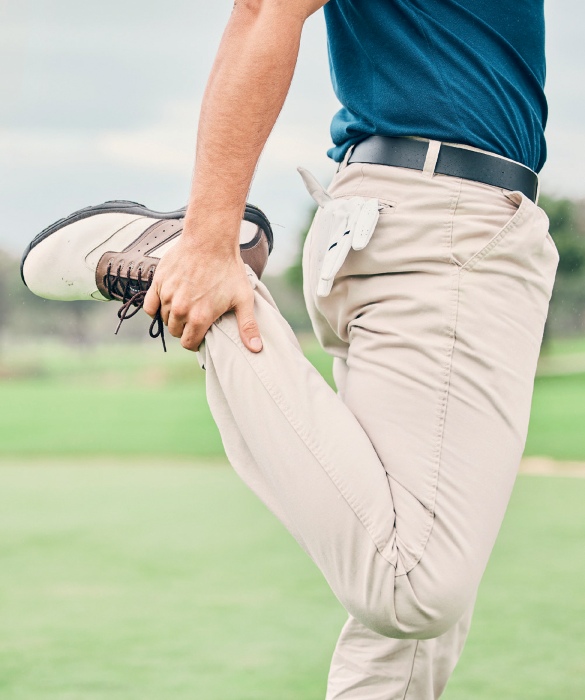
Knowing when to rest, seek professional advice, or take a few days away from the course may be more sensible than allowing a minor problem to become a lengthy one.
Playing in the Algarve adds another consideration: heat. A beautiful blue sky can disguise how much fluid is being lost during several hours outside, particularly with a breeze blowing across the course.
The UK Health Security Agency recommends staying hydrated throughout the day rather than waiting until you feel thirsty and, where possible, exercising during cooler periods such as the morning or evening.
It also advises sunscreen, shade, and an appropriate hat when the sun is strong. For an Algarve golfer, water in the bag and a sensible tee time can be every bit as important as remembering the putter. There are few prizes for completing 18 holes at two o’clock in August simply to prove that you can.
And then there is the part of golf that no amount of gym work can replicate: company. A round means several hours outdoors with friends, partners, or people we might otherwise never have met. The international consensus identifies social interaction, connection with others, and contact with nature among the game’s potential benefits.
Former Olympic triple-jump champion and R&A Global Ambassador Jonathan Edwards puts it rather more simply: “I’d be lost without golf.”
Perhaps that helps explain golf’s ability to remain a lifelong sport. Our handicap may change, the tees we choose may change, and the distance we hit the ball almost certainly will, but the enjoyment does not have to. Very few of us are preparing our bodies for the professional Tour. We are simply trying to play tomorrow, next season, and hopefully many seasons after that.
A little more movement, some basic strength, a proper warm-up, enough water, and the occasional sensible decision when something hurts are hardly revolutionary ideas. But golf is rarely about one revolutionary change.
More often, it is the collection of small improvements that makes the difference. And if looking after yourself means another 10, 20, or 30 years walking onto the first tee, it may prove to be the best investment you ever make in your game.